
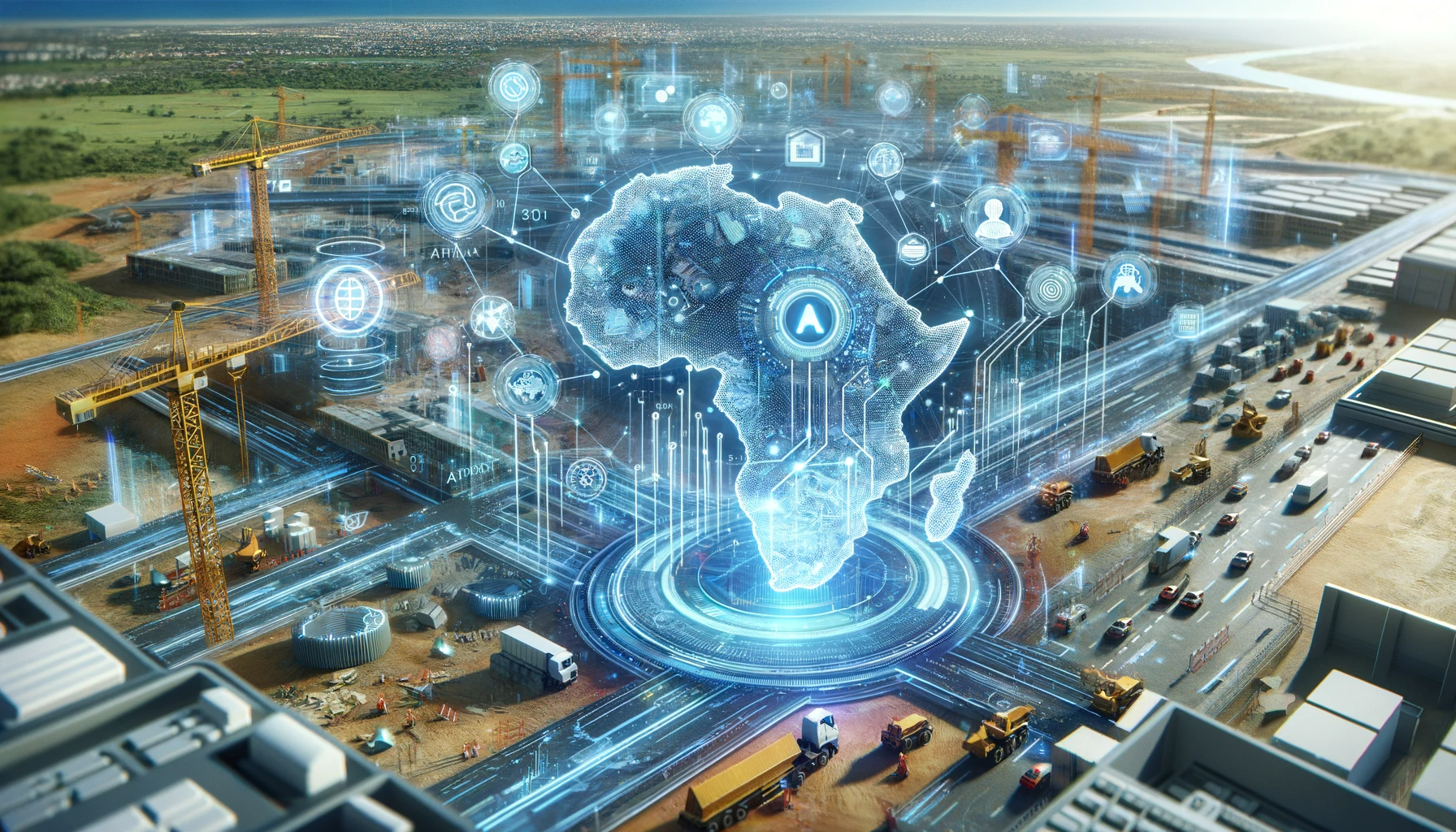
Infrastructure technology, often referred to as InfraTech, represents the integration of advanced digital tools, data analytics, and innovative engineering solutions into the planning, construction, and management of physical infrastructure. This emerging field has the potential to revolutionize Africa’s infrastructure sector, addressing long-standing challenges such as inadequate funding, inefficiencies, and poor maintenance. By leveraging InfraTech, Africa can accelerate its development, enhance resilience, and achieve the goals outlined in Agenda 2063.
InfraTech Solutions and Their Applications in Africa
Smart Infrastructure and IoT (Internet of Things)
Smart infrastructure utilizes IoT sensors and connected devices to monitor and manage infrastructure assets in real time. For example, smart grids can optimize energy distribution, reduce losses, and integrate renewable energy sources. In Africa, where electricity access remains a challenge, IoT-enabled grids can improve power reliability and support the transition to clean energy. Similarly, smart water management systems can detect leaks, monitor water quality, and ensure efficient distribution in urban and rural areas.
Geospatial Technology and GIS (Geographic Information Systems)
Geospatial technology enables precise mapping and data analysis for infrastructure planning. GIS can be used to identify optimal locations for roads, railways, and energy projects, minimizing environmental impact and maximizing economic benefits. In Africa, GIS can support transboundary infrastructure projects, such as the Trans-African Highway Network, by providing accurate data on terrain, population density, and resource availability.
Building Information Modeling (BIM)
BIM is a digital representation of the physical and functional characteristics of infrastructure projects. It facilitates collaboration among architects, engineers, and contractors, reducing errors and delays during construction. In Africa, BIM can be applied to large-scale projects like dams, airports, and urban housing developments, ensuring cost-effectiveness and sustainability.
Artificial Intelligence (AI) and Machine Learning
AI can analyze vast amounts of data to predict infrastructure failures, optimize maintenance schedules, and improve decision-making. For instance, AI-powered traffic management systems can reduce congestion in rapidly growing African cities. Machine learning algorithms can also assess the impact of climate change on infrastructure, enabling the design of resilient systems.
Blockchain for Transparent Financing
Blockchain technology can enhance transparency and accountability in infrastructure financing. By creating tamper-proof records of transactions, blockchain can attract private investors and development partners. In Africa, blockchain can be used to manage funds for cross-border projects, such as the African Continental Free Trade Area (AfCFTA)-related infrastructure, ensuring efficient resource allocation.
Prefabrication and Modular Construction
Prefabrication involves manufacturing building components off-site and assembling them on-site, reducing construction time and costs. This approach is particularly useful in Africa, where skilled labor and materials are often scarce. Modular construction can be employed to build schools, hospitals, and affordable housing quickly and efficiently.

Case Studies: InfraTech in Action
Kenya’s Konza Technopolis: Dubbed Africa’s “Silicon Savannah,” this smart city project leverages IoT, renewable energy, and digital infrastructure to create a hub for innovation and technology.
South Africa’s e-Toll System: Using IoT and AI, this system manages toll collection on highways, reducing traffic congestion and improving revenue collection.
Nigeria’s Digital Rail System: The Lagos-Ibadan railway incorporates BIM and smart sensors to ensure safety, efficiency, and real-time monitoring.
“As I stand at the edge of the Kazungula Bridge connecting Zambia and Botswana, watching smart sensors monitor traffic flow, I can't help but marvel at how far African infrastructure has come. Ten years ago, this was just a dream on paper. Today, it's a testament to how technology is revolutionizing our continent's development.”
Sign up to our newsletter
Sign up to receive news and updates. Each week well send you a summary of the latest articles. Keep an eye on your inbox!


What do you think?
The financing deal is a significant milestone in the project’s progress, and it is a credit to the company’s leadership and team for their tireless efforts in making this vision a reality. The company’s dedication to sustainability and environmental consciousness is a shining example for others in the industry to follow.