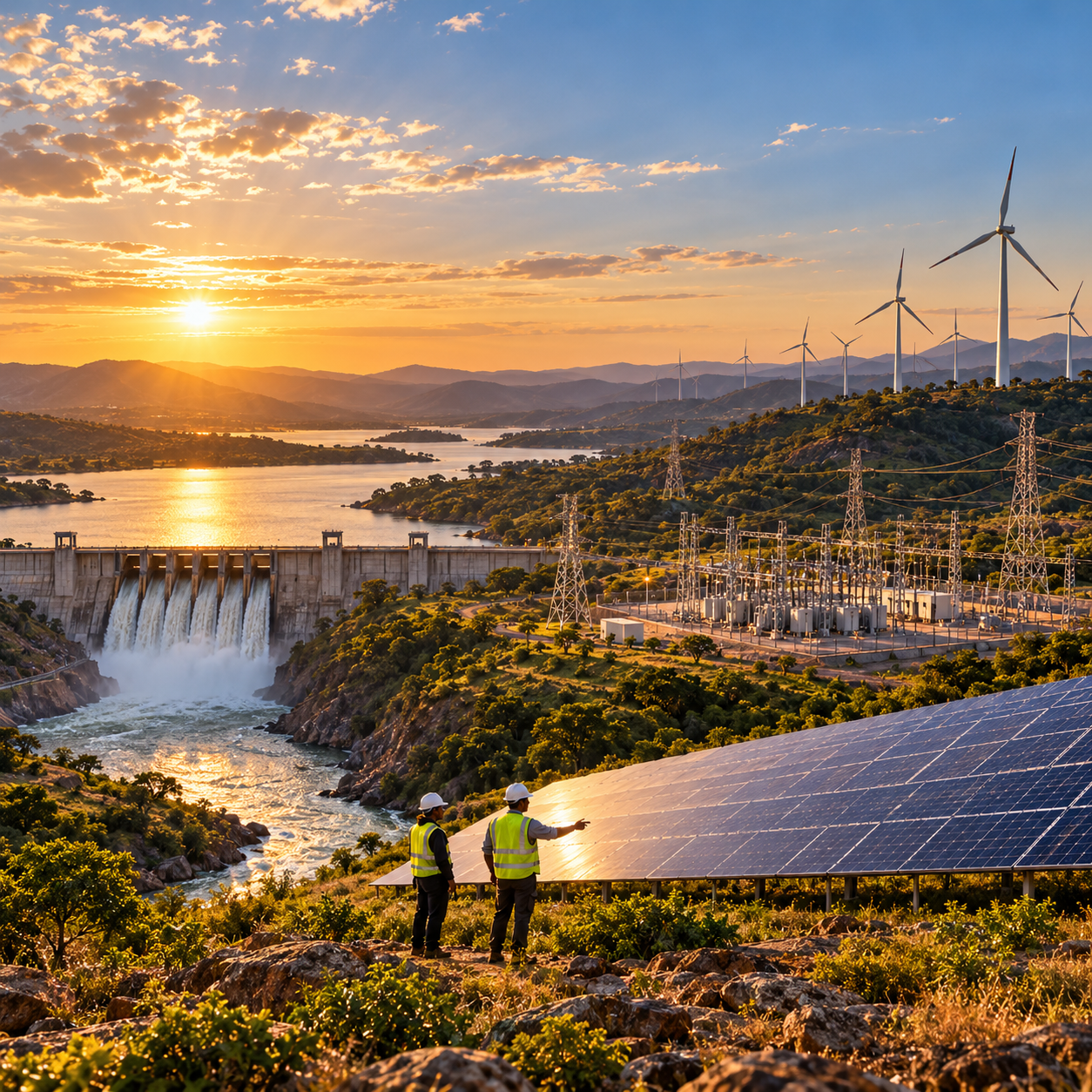
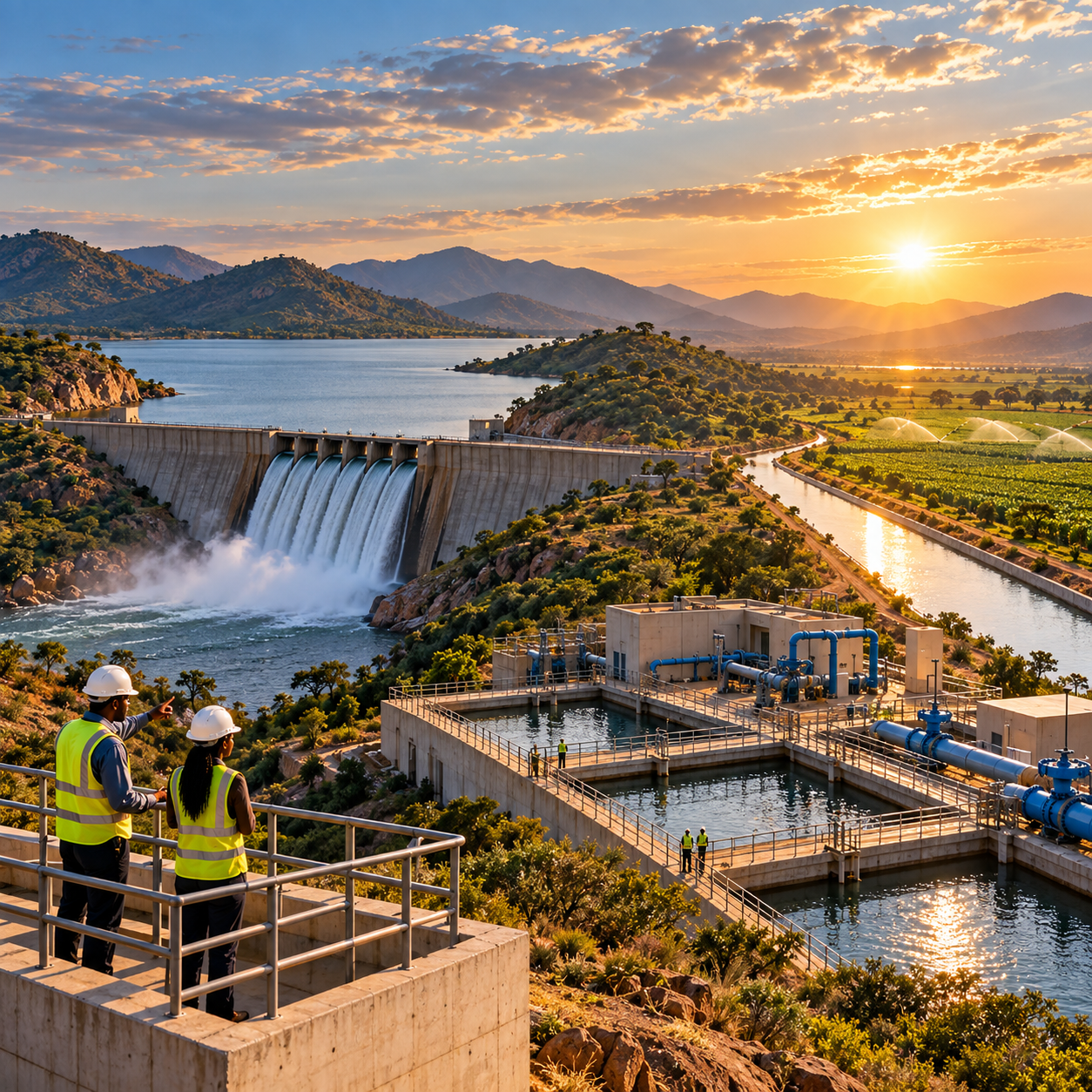
Present Africa's infrastructure projects to ministers, partners and investors. Open to every visitor, member and organisation that needs to brief stakeholders, with cinematic slides, map-led Atlas views and AI progress briefings.
647 published projects6 presentation themesAtlas map modeVoice narration
1Filter projectsby sector, country, stage or programme
2Selectthe projects you want to present
3Create a showwith AID Intelligence and present full screen
Lusaka - Kinshasa Fibre-optic Link (DRC section)I.02.06.02
Deployment and implementation of a broadband connectivity link between Kinshasa and Lusaka through the link Muanda-Kinshasa then Kinshasa-Kasumbalesa, afterwards establishes a cross boarder connection operated by Zamtel in Zambia and…
ICTDemocratic Republic of Congo, ZambiaCentral Africa, Southern Africapap1
Lusaka - Kinshasa Fibre-optic Link (Zambia section)I.02.06.01
The project involves the construction of a fibre optic network from Lusaka to Kasumbalesa a town at the border with the Democratic Republic of the Congo (DRC).
ICTDemocratic Republic of Congo, ZambiaCentral Africa, Southern Africapap1
Lusaka-Lilongwe Fibre-optic Link (Malawi section)I.02.19.02
The project entails the installation of the Malawi section of the 600 km fibre-optic link between Lusaka and Lilongwe: from the Zambia border to Lilongwe.
This project is the Zimbabwe section of the Beira - Harare railway (rail component of the Beira multimodal corridor), from the Mozambique border at Machipanda, to the capital Harare.
The AXIS Project aims to facilitate the development of an African internet infrastructure through policy and regulatory reform, capacity building and technical assistance. Development of an African internet infrastructure refers…
Master Plan for Regional Port Capacity and Regional Rail Linkages (including Lamu Port) (Phase 1)T.10.01
The project scope will cover construction of the first nine deep sea berths at the Lamu Port in Manda Bay to contain Crude Oil and Coal Terminals, General Cargo and Bulk Cargo…
TransportBurundi, Ethiopia, Kenya, Rwanda, South Sudan, UgandaEast Africa, North-Eastern Africapap1
The AXIS Project aims to facilitate the development of an African internet infrastructure through policy and regulatory reform, capacity building and technical assistance. Development of an African internet infrastructure refers…
Construction of a transmission line that connects Cahora Bassa Hydroelectric Power Station at Songo in Mozambique with the power system of Zambia at Serenje.
The project entails the construction of a 200 km, 400 kV(initially 220 kV) power line from Matambo substation, in Mozambique, to Phombeya, north of Blantyre. The first assignment will involve…
The AXIS Project aims to facilitate the development of an African internet infrastructure through policy and regulatory reform, capacity building and technical assistance. Development of an African internet infrastructure refers…
Nigeria Regional Internet Exchange Point(RIXP )I.03.39
The AXIS Project aims to facilitate the development of an African internet infrastructure through policy and regulatory reform, capacity building and technical assistance. Development of an African internet infrastructure refers…
The NWAS is one of the major North African transboundary groundwater basins shared by three North African countries (i.e. i.e. Algeria, Libya, and Tunisia) which covers an area of more than…
The Noumbiel Multi-purpose Dam is a planned infrastructure project on the Black Volta River, located on the border between Burkina Faso and Ghana. The project aims to construct a dam…
The study of the Ntem River Bridge is part of the Kribi-Campo-Bata maritime route linking the port of Kribi to Cameroon and Bata in Equatorial Guinea. The inter-capital connections study…
Not reportedTransaction Support & Financial CloseActiveExpress interest →
289
Nubian Sandstone Aquifer SystemW.07.01
The Nubian Sandstone Aquifer System (NSAS) underlies the countries of Chad, Egypt, Libya and Sudan, the total population of which is over 136 million. It is the world’s largest ‘fossil’…
WaterChad, Egypt, Libya, SudanCentral Africa, North Africa, North-Eastern AfricaIGAD
Upgrading of the Bujumbura-Rumonge-Nyanza Lac-Mugina (RN3) road will improve trade, transport and tourism in the East African region. The road has 3 main sections:
1) Bujumbura-Rumonge (78 km): Studies of its…
The project aims to provide solutions to the problems of interruption of navigation on Oubangui River, tributary of the Congo River in the region of Central Africa. This is particularly the case during…
WaterCentral African Republic, Democratic Republic of CongoCentral Africapap1
ICTI.02.06.02Lusaka - Kinshasa Fibre-optic Link (DRC section)
Democratic Republic of Congo, ZambiaCentral Africa, Southern Africapap1
Deployment and implementation of a broadband connectivity link between Kinshasa and Lusaka through the link Muanda-Kinshasa then Kinshasa-Kasumbalesa, afterwards establishes a cross boarder connection operated by Zamtel in Zambia and la Société Congolaise des Postes et des Télécommunications (SCPT) in DRC.
ICTI.02.06.01Lusaka - Kinshasa Fibre-optic Link (Zambia section)
Democratic Republic of Congo, ZambiaCentral Africa, Southern Africapap1
The project involves the construction of a fibre optic network from Lusaka to Kasumbalesa a town at the border with the Democratic Republic of the Congo (DRC).
ICTI.02.19.02Lusaka-Lilongwe Fibre-optic Link (Malawi section)
Malawi, ZambiaSouthern Africapap1
The project entails the installation of the Malawi section of the 600 km fibre-optic link between Lusaka and Lilongwe: from the Zambia border to Lilongwe.
This project is the Zimbabwe section of the Beira - Harare railway (rail component of the Beira multimodal corridor), from the Mozambique border at Machipanda, to the capital Harare.
The AXIS Project aims to facilitate the development of an African internet infrastructure through policy and regulatory reform, capacity building and technical assistance. Development of an African internet infrastructure refers to the establishment of regional internet exchange points (IXPs) and internet carriers.
The AXIS Project is being implemented through two phases. Phase I consists of capacity building to support the establishment of national IXPs through providing a series of two workshops for stakeholders and the Internet Service Provider Association (ISPA) on I) best practice and benefits of IXP and II) technical assistance through workshops which will cover the technical and administrative skills needed to set up, operate, and administer an IXP.
Phase II focuses on supporting establishment of Regional IXP and Regional Internet Carrier through provisioning Capacity building workshops on best practice and benefits of setting up RIXP/IC and providing technical assistance.
The AXIS Project is a flagship project of the African Regional Action Plan on Knowledge Economy (ARAPKE) endorsed by the African Union Executive Council.
The AXIS Project aims to facilitate the development of an African internet infrastructure through policy and regulatory reform, capacity building and technical assistance. Development of an African internet infrastructure refers to the establishment of regional internet exchange points (IXPs) and internet carriers.
The AXIS Project is being implemented through two phases. Phase I consists of capacity building to support the establishment of national IXPs through providing a series of two workshops for stakeholders and the Internet Service Provider Association (ISPA) on I) best practice and benefits of IXP and II) technical assistance through workshops which will cover the technical and administrative skills needed to set up, operate, and administer an IXP.
Phase II focuses on supporting establishment of Regional IXP and Regional Internet Carrier through provisioning Capacity building workshops on best practice and benefits of setting up RIXP/IC and providing technical assistance.
The AXIS Project is a flagship project of the African Regional Action Plan on Knowledge Economy (ARAPKE) endorsed by the African Union Executive Council.
TransportT.10.01Master Plan for Regional Port Capacity and Regional Rail Linkages (including Lamu Port) (Phase 1)
Burundi, Ethiopia, Kenya, Rwanda, South Sudan, UgandaEast Africa, North-Eastern Africapap1
The project scope will cover construction of the first nine deep sea berths at the Lamu Port in Manda Bay to contain Crude Oil and Coal Terminals, General Cargo and Bulk Cargo Terminals.
This may involve some of all of the following activities, i.e. dredging and reclamation; construction of berths and yards; construction of revetment, causeway and road; construction of buildings and utilities; procurement of equipment and tug boats; etc.
The AXIS Project aims to facilitate the development of an African internet infrastructure through policy and regulatory reform, capacity building and technical assistance. Development of an African internet infrastructure refers to the establishment of regional internet exchange points (IXPs) and internet carriers.
The AXIS Project is being implemented through two phases. Phase I consists of capacity building to support the establishment of national IXPs through providing a series of two workshops for stakeholders and the Internet Service Provider Association (ISPA) on I) best practice and benefits of IXP and II) technical assistance through workshops which will cover the technical and administrative skills needed to set up, operate, and administer an IXP.
Phase II focuses on supporting establishment of Regional IXP and Regional Internet Carrier through provisioning Capacity building workshops on best practice and benefits of setting up RIXP/IC and providing technical assistance.
The AXIS Project is a flagship project of the African Regional Action Plan on Knowledge Economy (ARAPKE) endorsed by the African Union Executive Council.
The AXIS Project aims to facilitate the development of an African internet infrastructure through policy and regulatory reform, capacity building and technical assistance. Development of an African internet infrastructure refers to the establishment of regional internet exchange points (IXPs) and internet carriers.
The AXIS Project is being implemented through two phases. Phase I consists of capacity building to support the establishment of national IXPs through providing a series of two workshops for stakeholders and the Internet Service Provider Association (ISPA) on I) best practice and benefits of IXP and II) technical assistance through workshops which will cover the technical and administrative skills needed to set up, operate, and administer an IXP.
Phase II focuses on supporting establishment of Regional IXP and Regional Internet Carrier through provisioning Capacity building workshops on best practice and benefits of setting up RIXP/IC and providing technical assistance.
The AXIS Project is a flagship project of the African Regional Action Plan on Knowledge Economy (ARAPKE) endorsed by the African Union Executive Council.
The AXIS Project aims to facilitate the development of an African internet infrastructure through policy and regulatory reform, capacity building and technical assistance. Development of an African internet infrastructure refers to the establishment of regional internet exchange points (IXPs) and internet carriers.
The AXIS Project is being implemented through two phases. Phase I consists of capacity building to support the establishment of national IXPs through providing a series of two workshops for stakeholders and the Internet Service Provider Association (ISPA) on I) best practice and benefits of IXP and II) technical assistance through workshops which will cover the technical and administrative skills needed to set up, operate, and administer an IXP.
Phase II focuses on supporting establishment of Regional IXP and Regional Internet Carrier through provisioning Capacity building workshops on best practice and benefits of setting up RIXP/IC and providing technical assistance.
The AXIS Project is a flagship project of the African Regional Action Plan on Knowledge Economy (ARAPKE) endorsed by the African Union Executive Council.
Construction of a transmission line that connects Cahora Bassa Hydroelectric Power Station at Songo in Mozambique with the power system of Zambia at Serenje.
The project entails the construction of a 200 km, 400 kV(initially 220 kV) power line from Matambo substation, in Mozambique, to Phombeya, north of Blantyre. The first assignment will involve the design, supply and installation of the 400 kV overhead transmission line from the Mozambique-Malawi border to a new substation at Phombeya. The second assignment will entail the design, supply and installation of the new 400 kV Phombeya substation. Other assignments include extension of Matambo substation (Mozambique) and upgrading of SCADA systems (EDM).
The AXIS Project aims to facilitate the development of an African internet infrastructure through policy and regulatory reform, capacity building and technical assistance. Development of an African internet infrastructure refers to the establishment of regional internet exchange points (IXPs) and internet carriers.
The AXIS Project is being implemented through two phases. Phase I consists of capacity building to support the establishment of national IXPs through providing a series of two workshops for stakeholders and the Internet Service Provider Association (ISPA) on I) best practice and benefits of IXP and II) technical assistance through workshops which will cover the technical and administrative skills needed to set up, operate, and administer an IXP.
Phase II focuses on supporting establishment of Regional IXP and Regional Internet Carrier through provisioning Capacity building workshops on best practice and benefits of setting up RIXP/IC and providing technical assistance.
The AXIS Project is a flagship project of the African Regional Action Plan on Knowledge Economy (ARAPKE) endorsed by the African Union Executive Council.
The AXIS Project aims to facilitate the development of an African internet infrastructure through policy and regulatory reform, capacity building and technical assistance. Development of an African internet infrastructure refers to the establishment of regional internet exchange points (IXPs) and internet carriers.
The AXIS Project is being implemented through two phases. Phase I consists of capacity building to support the establishment of national IXPs through providing a series of two workshops for stakeholders and the Internet Service Provider Association (ISPA) on I) best practice and benefits of IXP and II) technical assistance through workshops which will cover the technical and administrative skills needed to set up, operate, and administer an IXP.
Phase II focuses on supporting establishment of Regional IXP and Regional Internet Carrier through provisioning Capacity building workshops on best practice and benefits of setting up RIXP/IC and providing technical assistance.
The AXIS Project is a flagship project of the African Regional Action Plan on Knowledge Economy (ARAPKE) endorsed by the African Union Executive Council.
ICTI.03.39Nigeria Regional Internet Exchange Point(RIXP )
NigeriaWest Africapap1
The AXIS Project aims to facilitate the development of an African internet infrastructure through policy and regulatory reform, capacity building and technical assistance. Development of an African internet infrastructure refers to the establishment of regional internet exchange points (IXPs) and internet carriers.
The AXIS Project is being implemented through two phases. Phase I consists of capacity building to support the establishment of national IXPs through providing a series of two workshops for stakeholders and the Internet Service Provider Association (ISPA) on I) best practice and benefits of IXP and II) technical assistance through workshops which will cover the technical and administrative skills needed to set up, operate, and administer an IXP.
Phase II focuses on supporting establishment of Regional IXP and Regional Internet Carrier through provisioning Capacity building workshops on best practice and benefits of setting up RIXP/IC and providing technical assistance.
The AXIS Project is a flagship project of the African Regional Action Plan on Knowledge Economy (ARAPKE) endorsed by the African Union Executive Council.
The NWAS is one of the major North African transboundary groundwater basins shared by three North African countries (i.e. i.e. Algeria, Libya, and Tunisia) which covers an area of more than one million square kilometres. The NWSAS can be categorised as a multi-layered system of aquifers which embodies a huge stock of non-renewable groundwater.
The Noumbiel Multi-purpose Dam is a planned infrastructure project on the Black Volta River, located on the border between Burkina Faso and Ghana. The project aims to construct a dam with a reservoir for multiple uses, including hydropower generation, irrigation development, water supply, and flood control. It is a key project within the Volta River Basin and is recognized under the Programme for Infrastructure Development in Africa (PIDA). The dam is intended to regulate river flow, contributing to energy security and agricultural productivity in both countries. Technical details from recent studies indicate a focus on optimizing the dam's height and storage capacity to balance power output with environmental and social impacts.
The study of the Ntem River Bridge is part of the Kribi-Campo-Bata maritime route linking the port of Kribi to Cameroon and Bata in Equatorial Guinea. The inter-capital connections study will identify missing links and determine the technical and economic feasibility of the construction of a crossing structure and the development of a single border control post at the border of Cameroon and Equatorial Guinea. It will make technical, legal and financial recommendations for the management and operation of the Yaounde-Kribi-Bata-Libreville development and corridor.
Chad, Egypt, Libya, SudanCentral Africa, North Africa, North-Eastern AfricaIGAD
The Nubian Sandstone Aquifer System (NSAS) underlies the countries of Chad, Egypt, Libya and Sudan, the total population of which is over 136 million. It is the world’s largest ‘fossil’ water aquifer system.
The project scope involves:
Developing a standard mechanism for monitoring the development of the aquifer
Capacity building/ training for field investigations/monitoring of groundwater in four countries
Creating a legislative framework for attaining principles of cooperation and equitable utilization
Developing framework for the implementation of the regional strategy for utilization of the NSAS
Â
The Nubian Sandstone Aquifer System (NSAS) underlies the countries of Chad, Egypt, Libya and Sudan, the total population of which is over 136 million. It is the world's largest ‘fossil' water aquifer system stretching over approximately 2.6 million square km in Northeast Africa. Fresh groundwater reserves in the aquifer system is estimated at 372,950 billion cubic metre (BCM), out of which only 3.9% is recoverable with present?day technology. The riparian countries sharing the aquifer system face similar problems of arid climate, scarce surface water resources, persistent droughts and fragile ecosystems. The aquifer is a critically important source of water in this arid desert region and will be increasingly in demand in the future. Hence, all four countries have given priority to linking the NSAS groundwater exploitation to national development strategies and plans. Growing pressures on the aquifer system pose threats to both the quantity and quality of the resource and could, if not appropriately managed, lead to transboundary/shared problems and tension.
Upgrading of the Bujumbura-Rumonge-Nyanza Lac-Mugina (RN3) road will improve trade, transport and tourism in the East African region. The road has 3 main sections:
1) Bujumbura-Rumonge (78 km): Studies of its upgrading are ongoing, NEPAD/IPPF funds;
2) Rumonge-Nyanza Lac (45 km): Works are planned, funds from AfDB;
3) Nyanza Lac-Mugina (45 km): Upgrading completed.
Central African Republic, Democratic Republic of CongoCentral Africapap1
The project aims to provide solutions to the problems of interruption of navigation on Oubangui River, tributary of the Congo River in the region of Central Africa. This is particularly the case during periods of low water levels, and the supply of electricity to the Central African Republic (CAR), North Congo and the Congo. DRC, through the construction of a Oubangui flow control and power generation dam at the Palambo site, is about 60 km upstream from Bangui.
The characteristics of the scenario chosen among the solutions proposed by SOGREAH in 1990 were as follows:
Normal retention rating of 361 m;
Height of the dam of approximately 18 m;
Area of 606 x106 m 2;
Length of approximately 1,200 m;
Minimum downstream flow to reach at Zinga, about 70 km downstream from Bangui of 920 m3 / s;
Storage volume of 2,370 million m3;
Power generation of 30 MW;
Number of groups of 4 bulbs (unit flow: 94 m3 / s).
Showcase ready! You have a previously generated AI showcase for these projects in this session.
Generate compelling, AI-crafted narratives for your projects. The AID AI Engine will create powerful headlines, impact statements, and strategic context — perfect for presentations, stakeholder meetings, and exhibitions.
Narrative Style
Progress Briefing RECOMMENDED
Answers where it is, where it stands and what has been done — read from the latest progress reports in key points
Executive Briefing
Strategic impact, investment value & regional significance
Storytelling
Vivid narratives about community impact & continental vision
Technical
Engineering achievements, specs & development milestones
Investor Narrative
ROI potential, funding gaps, risk profile & bankability assessment
Tone & Mood
Will generate for 15projects (top by investment value). Estimated time: ~2 min.