Present Africa's infrastructure projects to ministers, partners and investors. Open to every visitor, member and organisation that needs to brief stakeholders, with cinematic slides, map-led Atlas views and AI progress briefings.
647 published projects6 presentation themesAtlas map modeVoice narration
1Filter projectsby sector, country, stage or programme
2Selectthe projects you want to present
3Create a showwith AID Intelligence and present full screen
Brazzaville - Kinshasa Fibre-optic Link (DRC section)
Deploy a subriver cable between the 2 most closest capital cities in the world (Brazzaville and Kinshasa separated just by the Congo river) with a broadband connectivity Fibre Optic Cable.
ICTDemocratic Republic of Congo, Republic of CongoCentral Africapap1
The project involves the construction of a One Stop Border Post between Congo and DRC. Related to this project is the construction of a road/rail bridge between Brazzaville and Kinshasa.
TransportDemocratic Republic of Congo, Republic of CongoCentral Africapap1
Upgrading of the Bujumbura-Rumonge-Nyanza Lac-Mugina (RN3) road will improve trade, transport and tourism in the East African region. The road has 3 main sections:
1) Bujumbura-Rumonge (78 km): Studies of its…
TransportBurundiEast Africapap1
Not reportedTransaction Support & Financial CloseActiveExpress interest →
Upgrading of the Bujumbura-Rumonge-Nyanza Lac-Mugina (RN3) road will improve trade, transport and tourism in the East African region. The road has 3 main sections:
1) Bujumbura-Rumonge (78 km): Studies of its…
The project comprise of the following: (1) complete or initiate dredging of port of Bujumbura to restore design depths of generally around 6 m on approach to, in anchorage and…
Burkina Faso-Benin-Niger Fibre-optic Link (Niger section)I.02.22.03
La réalisation de ce projet permet d’atteindre les objectifs planifiés par le Gouvernement du Niger,
conformément A sa politique sectorielle des télécommunications adoptée le 12 avril 2013 et A son Plan…
Burkina Faso-Niger Fibre-optic Link (Burkina Faso section)I.02.22.01
This link is completed since 2012 by the incumbent operator ONATEL-SA and is functional. The interconnection with Niger has been effective since October 2012. The network length is 420 km from…
The AXIS Project aims to facilitate the development of an African internet infrastructure through policy and regulatory reform, capacity building and technical assistance. Development of an African internet infrastructure refers…
The AXIS Project aims to facilitate the development of an African internet infrastructure through policy and regulatory reform, capacity building and technical assistance. Development of an African internet infrastructure refers…
The AXIS Project aims to facilitate the development of an African internet infrastructure through policy and regulatory reform, capacity building and technical assistance. Development of an African internet infrastructure refers…
The AXIS Project aims to facilitate the development of an African internet infrastructure through policy and regulatory reform, capacity building and technical assistance. Development of an African internet infrastructure refers…
The AXIS Project aims to facilitate the development of an African internet infrastructure through policy and regulatory reform, capacity building and technical assistance. Development of an African internet infrastructure refers…
The AXIS Project aims to facilitate the development of an African internet infrastructure through policy and regulatory reform, capacity building and technical assistance. Development of an African internet infrastructure refers…
Construction of the Dam and Development of the Palambo Hydroelectric PlantW.30.03
The project comprises a dam at the Palambo Rapids on the Oubangui River and an associated hydroelectric plant serving Bangui and neighbouring areas of the Republic of the Congo and…
WaterCentral African Republic, Democratic Republic of Congo, Republic of CongoCentral Africa2020
The AXIS Project aims to facilitate the development of an African internet infrastructure through policy and regulatory reform, capacity building and technical assistance. Development of an African internet infrastructure refers…
The AXIS Project aims to facilitate the development of an African internet infrastructure through policy and regulatory reform, capacity building and technical assistance. Development of an African internet infrastructure refers…
The AXIS Project aims to facilitate the development of an African internet infrastructure through policy and regulatory reform, capacity building and technical assistance. Development of an African internet infrastructure refers…
O projecto faz parte da interligação de transmissão Inga-Cabinda-Pointe Noire, ligando os sistemas de energia da RDC, Angola e Congo, com uma capacidade de transferência de 600 MW.
EnergyAngola, Democratic Republic of CongoCentral Africa, Southern Africapap1
Egypt - Libya section of ELTAM Transmission Interconnector (Libya part)E.09.03.02
This project forms part of the ELTAM transmission interconnector which connects the power markets of Egypt, Libya, Tunisia, Algeria and Mali. In particular, it involves the reinforcement of the Libya…
Egypt Regional Internet Exchange Point(RIXP)I.03.37
The AXIS Project aims to facilitate the development of an African internet infrastructure through policy and regulatory reform, capacity building and technical assistance. Development of an African internet infrastructure refers…
Equatorial Guinea Intenet EXchange Point (IXP)I.03.07
The AXIS Project aims to facilitate the development of an African internet infrastructure through policy and regulatory reform, capacity building and technical assistance. Development of an African internet infrastructure refers…
The AXIS Project aims to facilitate the development of an African internet infrastructure through policy and regulatory reform, capacity building and technical assistance. Development of an African internet infrastructure refers…
The AXIS Project aims to facilitate the development of an African internet infrastructure through policy and regulatory reform, capacity building and technical assistance. Development of an African internet infrastructure refers…
The AXIS Project aims to facilitate the development of an African internet infrastructure through policy and regulatory reform, capacity building and technical assistance. Development of an African internet infrastructure refers…
Construction of a dam and hydroelectric plant of 90 MW on the Niandan River in Guinea with a reservoir of about 5 billion m3 of water.
The project has two components,…
Establishing Forbes/ Machipanda One-Stop Border Post (OSBP). Zimbabwe has prepared improvement plans for both Forbes and Nyamapanda that have been ready since 2005 but have not been implemented. The improvement…
ICTBrazzaville - Kinshasa Fibre-optic Link (DRC section)
Democratic Republic of Congo, Republic of CongoCentral Africapap1
Deploy a subriver cable between the 2 most closest capital cities in the world (Brazzaville and Kinshasa separated just by the Congo river) with a broadband connectivity Fibre Optic Cable.
Democratic Republic of Congo, Republic of CongoCentral Africapap1
The project involves the construction of a One Stop Border Post between Congo and DRC. Related to this project is the construction of a road/rail bridge between Brazzaville and Kinshasa.
Upgrading of the Bujumbura-Rumonge-Nyanza Lac-Mugina (RN3) road will improve trade, transport and tourism in the East African region. The road has 3 main sections:
1) Bujumbura-Rumonge (78 km): Studies of its upgrading are ongoing, NEPAD/IPPF funds;
2) Rumonge-Nyanza Lac (45 km): Works are planned, funds from AfDB;
3) Nyanza Lac-Mugina (45 km): Upgrading completed.
TransportT.08.03.02Bujumbura - Rumonge-Nyanza Lac-Mugina (RN3) Road (168 km)
BurundiEast Africapap1
Upgrading of the Bujumbura-Rumonge-Nyanza Lac-Mugina (RN3) road will improve trade, transport and tourism in the East African region. The road has 3 main sections:
1) Bujumbura-Rumonge (78 km): Studies of its upgrading are ongoing, NEPAD/IPPF funds;
2) Rumonge-Nyanza Lac (45 km): Works are planned, funds from AfDB;
3) Nyanza Lac-Mugina (45 km): Upgrading completed.
The project comprise of the following: (1) complete or initiate dredging of port of Bujumbura to restore design depths of generally around 6 m on approach to, in anchorage and along Berths; (2) establish a watercourse management system to minimize soil erosion and sedimentation at ports; and (3) rehabilitating or establishing of areas and ramps to accommodate vehicles (in particular MAFI trailers and forklifts) involved with RoRo operations at ports.
ICTI.02.22.03Burkina Faso-Benin-Niger Fibre-optic Link (Niger section)
Benin, Burkina Faso, NigerWest Africapap1
La réalisation de ce projet permet d’atteindre les objectifs planifiés par le Gouvernement du Niger,
conformément A sa politique sectorielle des télécommunications adoptée le 12 avril 2013 et A son Plan de Développement Economique et Social (PDES 2017-2021). Ces objectifs sont les suivants :
Renforcer et sécuriser la connectivité internationale large bande;
Offrir A la population un accès A un coA»t abordable aux services TIC;
Contribuer A la réduction de la pauvreté par la facilitation de nouvelles sources de revenues;
Mettre en place des infrastructures large bande pour le développement des services e-administration, e-éducation, e-santé, e-commerce, etc.
Devenir un hub des télécommunications entre l"’Afrique subsaharienne et le Maghreb et contribuer A la réalisation des objectifs d’interconnectivité régionale et internationale aux infrastructures large bande.
Le périmètre du projet est composé de cinq (5) tronçons qui se se présentent comme suit :
Le tronçon Arlit- Assamaka- Frontière Algérie: 220 kms
Le tronçon Zinder - Tinkim - Frontière du Nigeria: 117 kms
Le tronçon Diffa - Nguigmi - Frontière du Tchad: 186 kms
Le tronçon Niamey - Dosso - Gaya - Frontière du Benin: 285 kms
Le tronçon Niamey - Makalondi - Frontière du Burkina Faso: 111 kms
ICTI.02.22.01Burkina Faso-Niger Fibre-optic Link (Burkina Faso section)
Burkina Faso, NigerWest Africapap1
This link is completed since 2012 by the incumbent operator ONATEL-SA and is functional. The interconnection with Niger has been effective since October 2012. The network length is 420 km from Ouaga to the Niger border (Makalondi). It is 36 - core G652B direct buried cable.
The AXIS Project aims to facilitate the development of an African internet infrastructure through policy and regulatory reform, capacity building and technical assistance. Development of an African internet infrastructure refers to the establishment of regional internet exchange points (IXPs) and internet carriers.
The AXIS Project is being implemented through two phases. Phase I consists of capacity building to support the establishment of national IXPs through providing a series of two workshops for stakeholders and the Internet Service Provider Association (ISPA) on I) best practice and benefits of IXP and II) technical assistance through workshops which will cover the technical and administrative skills needed to set up, operate, and administer an IXP.
Phase II focuses on supporting establishment of Regional IXP and Regional Internet Carrier through provisioning Capacity building workshops on best practice and benefits of setting up RIXP/IC and providing technical assistance.
The AXIS Project is a flagship project of the African Regional Action Plan on Knowledge Economy (ARAPKE) endorsed by the African Union Executive Council.
The AXIS Project aims to facilitate the development of an African internet infrastructure through policy and regulatory reform, capacity building and technical assistance. Development of an African internet infrastructure refers to the establishment of regional internet exchange points (IXPs) and internet carriers.
The AXIS Project is being implemented through two phases. Phase I consists of capacity building to support the establishment of national IXPs through providing a series of two workshops for stakeholders and the Internet Service Provider Association (ISPA) on I) best practice and benefits of IXP and II) technical assistance through workshops which will cover the technical and administrative skills needed to set up, operate, and administer an IXP.
Phase II focuses on supporting establishment of Regional IXP and Regional Internet Carrier through provisioning Capacity building workshops on best practice and benefits of setting up RIXP/IC and providing technical assistance.
The AXIS Project is a flagship project of the African Regional Action Plan on Knowledge Economy (ARAPKE) endorsed by the African Union Executive Council.
The AXIS Project aims to facilitate the development of an African internet infrastructure through policy and regulatory reform, capacity building and technical assistance. Development of an African internet infrastructure refers to the establishment of regional internet exchange points (IXPs) and internet carriers.
The AXIS Project aims to facilitate the development of an African internet infrastructure through policy and regulatory reform, capacity building and technical assistance. Development of an African internet infrastructure refers to the establishment of regional internet exchange points (IXPs) and internet carriers.
The AXIS Project is being implemented through two phases. Phase I consists of capacity building to support the establishment of national IXPs through providing a series of two workshops for stakeholders and the Internet Service Provider Association (ISPA) on I) best practice and benefits of IXP and II) technical assistance through workshops which will cover the technical and administrative skills needed to set up, operate, and administer an IXP.
Phase II focuses on supporting establishment of Regional IXP and Regional Internet Carrier through provisioning Capacity building workshops on best practice and benefits of setting up RIXP/IC and providing technical assistance.
The AXIS Project is a flagship project of the African Regional Action Plan on Knowledge Economy (ARAPKE) endorsed by the African Union Executive Council.
The AXIS Project aims to facilitate the development of an African internet infrastructure through policy and regulatory reform, capacity building and technical assistance. Development of an African internet infrastructure refers to the establishment of regional internet exchange points (IXPs) and internet carriers.
The AXIS Project aims to facilitate the development of an African internet infrastructure through policy and regulatory reform, capacity building and technical assistance. Development of an African internet infrastructure refers to the establishment of regional internet exchange points (IXPs) and internet carriers.
The AXIS Project is being implemented through two phases. Phase I consists of capacity building to support the establishment of national IXPs through providing a series of two workshops for stakeholders and the Internet Service Provider Association (ISPA) on I) best practice and benefits of IXP and II) technical assistance through workshops which will cover the technical and administrative skills needed to set up, operate, and administer an IXP.
Phase II focuses on supporting establishment of Regional IXP and Regional Internet Carrier through provisioning Capacity building workshops on best practice and benefits of setting up RIXP/IC and providing technical assistance.
The AXIS Project is a flagship project of the African Regional Action Plan on Knowledge Economy (ARAPKE) endorsed by the African Union Executive Council.
The AXIS Project aims to facilitate the development of an African internet infrastructure through policy and regulatory reform, capacity building and technical assistance. Development of an African internet infrastructure refers to the establishment of regional internet exchange points (IXPs) and internet carriers.
The AXIS Project aims to facilitate the development of an African internet infrastructure through policy and regulatory reform, capacity building and technical assistance. Development of an African internet infrastructure refers to the establishment of regional internet exchange points (IXPs) and internet carriers.
The AXIS Project is being implemented through two phases. Phase I consists of capacity building to support the establishment of national IXPs through providing a series of two workshops for stakeholders and the Internet Service Provider Association (ISPA) on I) best practice and benefits of IXP and II) technical assistance through workshops which will cover the technical and administrative skills needed to set up, operate, and administer an IXP.
Phase II focuses on supporting establishment of Regional IXP and Regional Internet Carrier through provisioning Capacity building workshops on best practice and benefits of setting up RIXP/IC and providing technical assistance.
The AXIS Project is a flagship project of the African Regional Action Plan on Knowledge Economy (ARAPKE) endorsed by the African Union Executive Council.
The AXIS Project aims to facilitate the development of an African internet infrastructure through policy and regulatory reform, capacity building and technical assistance. Development of an African internet infrastructure refers to the establishment of regional internet exchange points (IXPs) and internet carriers.
The AXIS Project aims to facilitate the development of an African internet infrastructure through policy and regulatory reform, capacity building and technical assistance. Development of an African internet infrastructure refers to the establishment of regional internet exchange points (IXPs) and internet carriers.
The AXIS Project is being implemented through two phases. Phase I consists of capacity building to support the establishment of national IXPs through providing a series of two workshops for stakeholders and the Internet Service Provider Association (ISPA) on I) best practice and benefits of IXP and II) technical assistance through workshops which will cover the technical and administrative skills needed to set up, operate, and administer an IXP.
Phase II focuses on supporting establishment of Regional IXP and Regional Internet Carrier through provisioning Capacity building workshops on best practice and benefits of setting up RIXP/IC and providing technical assistance.
The AXIS Project is a flagship project of the African Regional Action Plan on Knowledge Economy (ARAPKE) endorsed by the African Union Executive Council.
WaterW.30.03Construction of the Dam and Development of the Palambo Hydroelectric Plant
Central African Republic, Democratic Republic of Congo, Republic of CongoCentral Africa2020
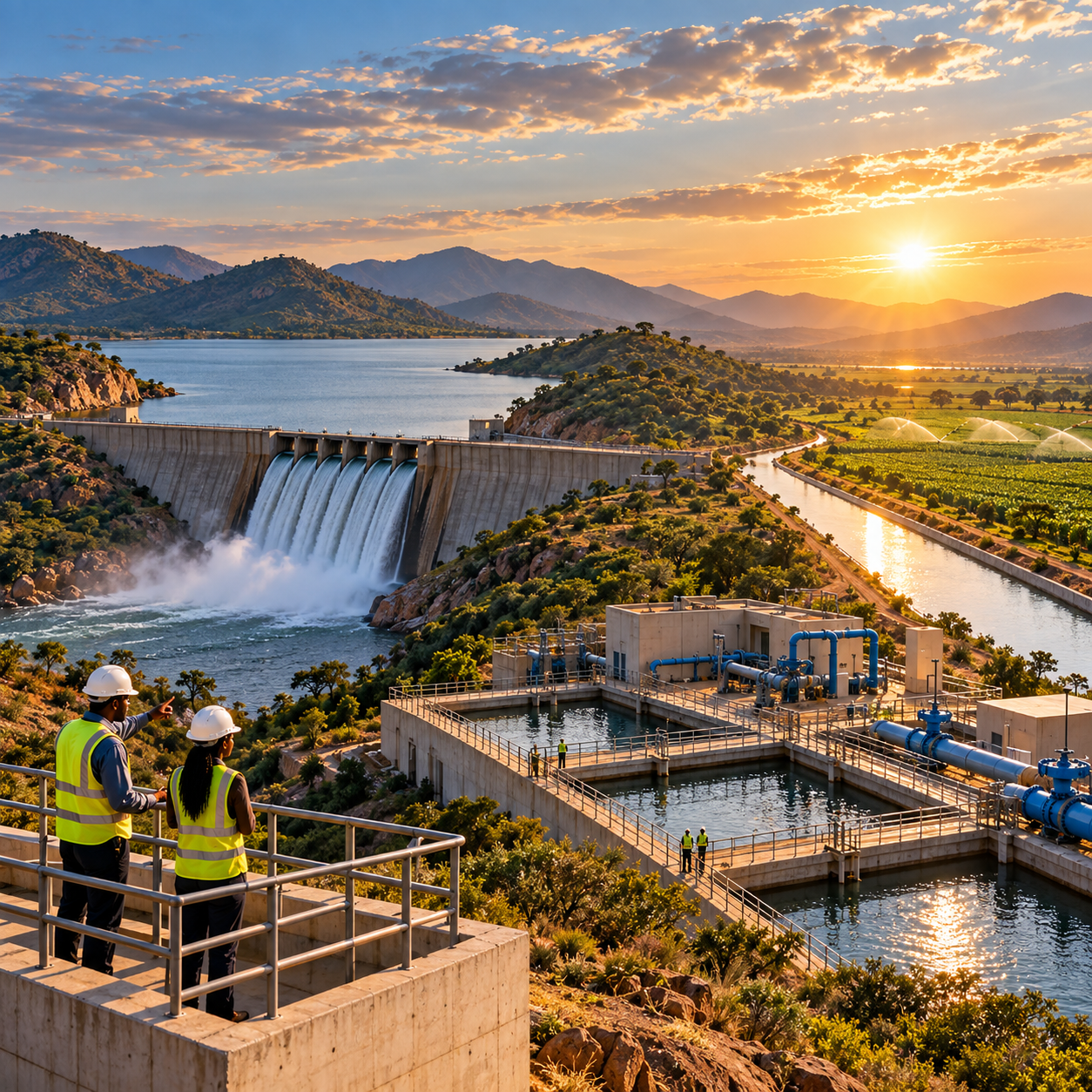
The project comprises a dam at the Palambo Rapids on the Oubangui River and an associated hydroelectric plant serving Bangui and neighbouring areas of the Republic of the Congo and the Democratic Republic of the Congo. The dam would regulate downstream flows, particularly during the low-water season, while supporting electricity generation and safer, more reliable navigation between Bangui, Brazzaville and Kinshasa. The project is also linked conceptually to the Oubangui-to-Lake-Chad water-transfer initiative.
The AXIS Project aims to facilitate the development of an African internet infrastructure through policy and regulatory reform, capacity building and technical assistance. Development of an African internet infrastructure refers to the establishment of regional internet exchange points (IXPs) and internet carriers.
The AXIS Project is being implemented through two phases. Phase I consists of capacity building to support the establishment of national IXPs through providing a series of two workshops for stakeholders and the Internet Service Provider Association (ISPA) on I) best practice and benefits of IXP and II) technical assistance through workshops which will cover the technical and administrative skills needed to set up, operate, and administer an IXP.
Phase II focuses on supporting establishment of Regional IXP and Regional Internet Carrier through provisioning Capacity building workshops on best practice and benefits of setting up RIXP/IC and providing technical assistance.
The AXIS Project is a flagship project of the African Regional Action Plan on Knowledge Economy (ARAPKE) endorsed by the African Union Executive Council.
The AXIS Project aims to facilitate the development of an African internet infrastructure through policy and regulatory reform, capacity building and technical assistance. Development of an African internet infrastructure refers to the establishment of regional internet exchange points (IXPs) and internet carriers.
The AXIS Project is being implemented through two phases. Phase I consists of capacity building to support the establishment of national IXPs through providing a series of two workshops for stakeholders and the Internet Service Provider Association (ISPA) on I) best practice and benefits of IXP and II) technical assistance through workshops which will cover the technical and administrative skills needed to set up, operate, and administer an IXP.
Phase II focuses on supporting establishment of Regional IXP and Regional Internet Carrier through provisioning Capacity building workshops on best practice and benefits of setting up RIXP/IC and providing technical assistance.
The AXIS Project is a flagship project of the African Regional Action Plan on Knowledge Economy (ARAPKE) endorsed by the African Union Executive Council.
The AXIS Project aims to facilitate the development of an African internet infrastructure through policy and regulatory reform, capacity building and technical assistance. Development of an African internet infrastructure refers to the establishment of regional internet exchange points (IXPs) and internet carriers.
The AXIS Project aims to facilitate the development of an African internet infrastructure through policy and regulatory reform, capacity building and technical assistance. Development of an African internet infrastructure refers to the establishment of regional internet exchange points (IXPs) and internet carriers.
The AXIS Project is being implemented through two phases. Phase I consists of capacity building to support the establishment of national IXPs through providing a series of two workshops for stakeholders and the Internet Service Provider Association (ISPA) on I) best practice and benefits of IXP and II) technical assistance through workshops which will cover the technical and administrative skills needed to set up, operate, and administer an IXP.
Phase II focuses on supporting establishment of Regional IXP and Regional Internet Carrier through provisioning Capacity building workshops on best practice and benefits of setting up RIXP/IC and providing technical assistance.
The AXIS Project is a flagship project of the African Regional Action Plan on Knowledge Economy (ARAPKE) endorsed by the African Union Executive Council.
Angola, Democratic Republic of CongoCentral Africa, Southern Africapap1
O projecto faz parte da interligação de transmissão Inga-Cabinda-Pointe Noire, ligando os sistemas de energia da RDC, Angola e Congo, com uma capacidade de transferência de 600 MW.
EnergyE.09.03.02Egypt - Libya section of ELTAM Transmission Interconnector (Libya part)
Egypt, LibyaNorth Africapap1
This project forms part of the ELTAM transmission interconnector which connects the power markets of Egypt, Libya, Tunisia, Algeria and Mali. In particular, it involves the reinforcement of the Libya part of the 340 km / 500 kV Egypt to Libya section from the Egypt border to Tobruk.
ICTI.03.37Egypt Regional Internet Exchange Point(RIXP)
EgyptNorth Africapap1
The AXIS Project aims to facilitate the development of an African internet infrastructure through policy and regulatory reform, capacity building and technical assistance. Development of an African internet infrastructure refers to the establishment of regional internet exchange points (IXPs) and internet carriers.
The AXIS Project is being implemented through two phases. Phase I consists of capacity building to support the establishment of national IXPs through providing a series of two workshops for stakeholders and the Internet Service Provider Association (ISPA) on I) best practice and benefits of IXP and II) technical assistance through workshops which will cover the technical and administrative skills needed to set up, operate, and administer an IXP.
Phase II focuses on supporting establishment of Regional IXP and Regional Internet Carrier through provisioning Capacity building workshops on best practice and benefits of setting up RIXP/IC and providing technical assistance.
The AXIS Project is a flagship project of the African Regional Action Plan on Knowledge Economy (ARAPKE) endorsed by the African Union Executive Council
ICTI.03.07Equatorial Guinea Intenet EXchange Point (IXP)
Equatorial GuineaCentral Africapap1
The AXIS Project aims to facilitate the development of an African internet infrastructure through policy and regulatory reform, capacity building and technical assistance. Development of an African internet infrastructure refers to the establishment of regional internet exchange points (IXPs) and internet carriers.
The AXIS Project aims to facilitate the development of an African internet infrastructure through policy and regulatory reform, capacity building and technical assistance. Development of an African internet infrastructure refers to the establishment of regional internet exchange points (IXPs) and internet carriers.
The AXIS Project is being implemented through two phases. Phase I consists of capacity building to support the establishment of national IXPs through providing a series of two workshops for stakeholders and the Internet Service Provider Association (ISPA) on I) best practice and benefits of IXP and II) technical assistance through workshops which will cover the technical and administrative skills needed to set up, operate, and administer an IXP.
Phase II focuses on supporting establishment of Regional IXP and Regional Internet Carrier through provisioning Capacity building workshops on best practice and benefits of setting up RIXP/IC and providing technical assistance.
The AXIS Project is a flagship project of the African Regional Action Plan on Knowledge Economy (ARAPKE) endorsed by the African Union Executive Council.
The AXIS Project aims to facilitate the development of an African internet infrastructure through policy and regulatory reform, capacity building and technical assistance. Development of an African internet infrastructure refers to the establishment of regional internet exchange points (IXPs) and internet carriers.
The AXIS Project aims to facilitate the development of an African internet infrastructure through policy and regulatory reform, capacity building and technical assistance. Development of an African internet infrastructure refers to the establishment of regional internet exchange points (IXPs) and internet carriers.
The AXIS Project is being implemented through two phases. Phase I consists of capacity building to support the establishment of national IXPs through providing a series of two workshops for stakeholders and the Internet Service Provider Association (ISPA) on I) best practice and benefits of IXP and II) technical assistance through workshops which will cover the technical and administrative skills needed to set up, operate, and administer an IXP.
Phase II focuses on supporting establishment of Regional IXP and Regional Internet Carrier through provisioning Capacity building workshops on best practice and benefits of setting up RIXP/IC and providing technical assistance.
The AXIS Project is a flagship project of the African Regional Action Plan on Knowledge Economy (ARAPKE) endorsed by the African Union Executive Council.
The AXIS Project aims to facilitate the development of an African internet infrastructure through policy and regulatory reform, capacity building and technical assistance. Development of an African internet infrastructure refers to the establishment of regional internet exchange points (IXPs) and internet carriers.
The AXIS Project is being implemented through two phases. Phase I consists of capacity building to support the establishment of national IXPs through providing a series of two workshops for stakeholders and the Internet Service Provider Association (ISPA) on I) best practice and benefits of IXP and II) technical assistance through workshops which will cover the technical and administrative skills needed to set up, operate, and administer an IXP.
Phase II focuses on supporting establishment of Regional IXP and Regional Internet Carrier through provisioning Capacity building workshops on best practice and benefits of setting up RIXP/IC and providing technical assistance.
The AXIS Project is a flagship project of the African Regional Action Plan on Knowledge Economy (ARAPKE) endorsed by the African Union Executive Council.
The AXIS Project aims to facilitate the development of an African internet infrastructure through policy and regulatory reform, capacity building and technical assistance. Development of an African internet infrastructure refers to the establishment of regional internet exchange points (IXPs) and internet carriers.
The AXIS Project aims to facilitate the development of an African internet infrastructure through policy and regulatory reform, capacity building and technical assistance. Development of an African internet infrastructure refers to the establishment of regional internet exchange points (IXPs) and internet carriers.
The AXIS Project is being implemented through two phases. Phase I consists of capacity building to support the establishment of national IXPs through providing a series of two workshops for stakeholders and the Internet Service Provider Association (ISPA) on I) best practice and benefits of IXP and II) technical assistance through workshops which will cover the technical and administrative skills needed to set up, operate, and administer an IXP.
Phase II focuses on supporting establishment of Regional IXP and Regional Internet Carrier through provisioning Capacity building workshops on best practice and benefits of setting up RIXP/IC and providing technical assistance.
The AXIS Project is a flagship project of the African Regional Action Plan on Knowledge Economy (ARAPKE) endorsed by the African Union Executive Council.
WaterW.02.01Fomi Multi-purpose Dam (Niger River Basin)
Guinea, Mali, Niger, NigeriaWest Africapap1
Construction of a dam and hydroelectric plant of 90 MW on the Niandan River in Guinea with a reservoir of about 5 billion m3 of water.
The project has two components, namely:
- Strengthen the institutional and financial capacity of the Niger Basin Authority (NBA) to sustainably fulfill its basic mandate; and
- Facilitate evidence-based decision-making in the process of preparing Fomi's multipurpose dams and in parallel strengthening of ABN's capabilities through its direct involvement in this complex project.
The Fomi Dam initiative has been continued in two related projects:
First, an APL-1 project on water resources development and sustainable ecosystem management (WRD SEM) funded by the World Bank (P093806) and secondly, the Niger River Basin Management Project. It is unclear if the APL-1 project is still active through a follow-up phase which might likely be named APL-2.
The Niger River Basin Management Project was approved for CIWA funding in November 2014 and aims to strengthen the NBA's capacity to prepare for Fomi in two phases, namely:
a) facilitate dialogue between stakeholders in Guinea, Mali and the NBA to develop a roadmap on how to proceed with the preparation of the Fomi dam project; and
b) Complementary studies to the main preparatory studies supported by WRD SEM (APL-1).
Establishing Forbes/ Machipanda One-Stop Border Post (OSBP). Zimbabwe has prepared improvement plans for both Forbes and Nyamapanda that have been ready since 2005 but have not been implemented. The improvement plans envisage the expansion of the border control area and building of additional facilities and infrastructure. The existing Forbes border post building is currently under renovation and expansion to accommodate commercial office and increasing space in the travellers' clearance hall.
Showcase ready! You have a previously generated AI showcase for these projects in this session.
Generate compelling, AI-crafted narratives for your projects. The AID AI Engine will create powerful headlines, impact statements, and strategic context — perfect for presentations, stakeholder meetings, and exhibitions.
Narrative Style
Progress Briefing RECOMMENDED
Answers where it is, where it stands and what has been done — read from the latest progress reports in key points
Executive Briefing
Strategic impact, investment value & regional significance
Storytelling
Vivid narratives about community impact & continental vision
Technical
Engineering achievements, specs & development milestones
Investor Narrative
ROI potential, funding gaps, risk profile & bankability assessment
Tone & Mood
Will generate for 15projects (top by investment value). Estimated time: ~2 min.



 AID Showcase