#
Project
Investment · stage
1
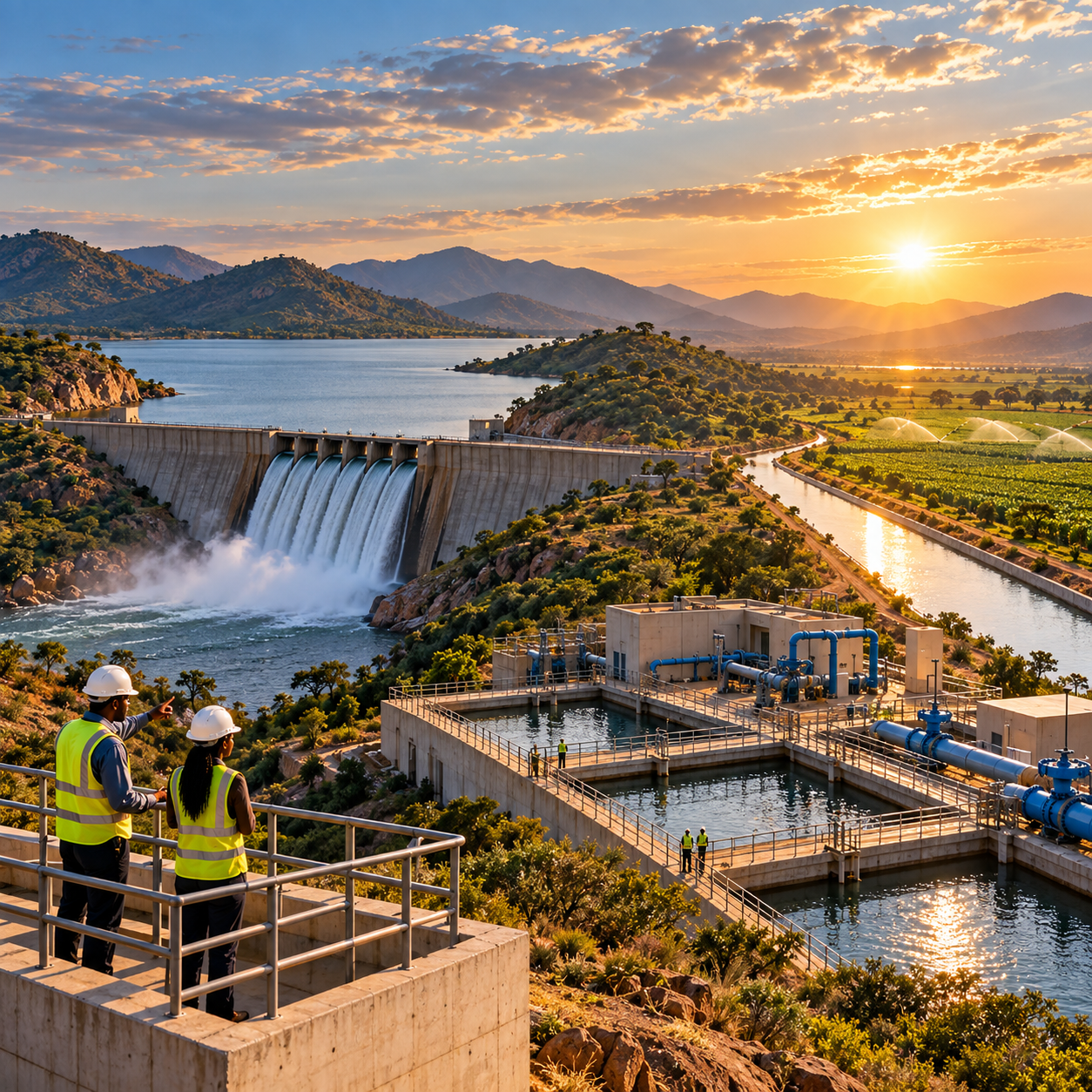
Dawa River Multi-purpose Dam
W.30.06
The project proposes a multipurpose dam on the Dawa River approximately 20 km upstream of Rhamu Dimtu in Kenya and near Boni in Ethiopia. Current PIDA specifications indicate an estimated…
$604M
Project Definition Active
2

Transborder Submarine Fiber PoPs, Regional Smart Hub Facility and Data Centre
I.02.30.05
The Transborder Submarine Fiber PoPs, Regional Smart Hub Facility and Data Centre is a multi-country ICT infrastructure project under the PIDA Priority Action Plan 2 (PAP 2) 2021-2030. The project…
$530M
Project Structuring Active
3

Berbera-Hargeisa-Kalabayd-Togowuchale Road
T.07.03.03
The project involves rehabilitation of Kalabayd - Hargeisa - Berbera road (221km); and Upgrading of Kalabayd - Togwachalle road section (20km). Also project involves construction of Hargeisa bypass (25km).
Not reported
Operation Active
4
Development of a Continental Aviation Infrastructure Master Plan Including a Seamless Airspace Architecture
T.AV.26.01
The project supports operationalisation of the Single African Air Transport Market by addressing the infrastructure and airspace-management constraints that limit safe, efficient and competitive air transport. It covers both physical…
Not reported
Project Definition Active
5
Somalia IXP
I.03.20
The AXIS Project aims to facilitate the development of an African internet infrastructure through policy and regulatory reform, capacity building and technical assistance. Development of an African internet infrastructure refers…
Not reported
Operation Active
6
Transborder Submarine Fiber PoPs and Regional Smart Hub Facility and Data center
Kenya already has several sub-marine fibers landing in Mombasa and has already done terrestrial fiber connecting the sub-marine cable to the borders of the other partner countries ( Busia border…
Not reported
Project Structuring Active
7
Dawa Aquifer Feasibility Study
Feseabilty study; Assessment of extent and potential of the Aquifer.
Not reported
Feasibility Active
8
Merti Aquifer Feasibility Study
Feasibbility studies in Merti Basin
Not reported
Enabling Environment and Needs Assessment Completed
9
Nairobi - Mogadishu Fibre-optic Link (Kenya section)
I.02.03.01
Not reported
Active
10
Nairobi - Mogadishu Fibre-optic Link (Somalia section)
I.02.03.02
Not reported
Pre-Feasibility Active
11
Shabelle Transboundary Aquiffer Feasibility Study
Feasibility studies in Shabelle Basin
Not reported
Pre-Feasibility Active
 AID Showcase