#
Project
Investment · stage
51
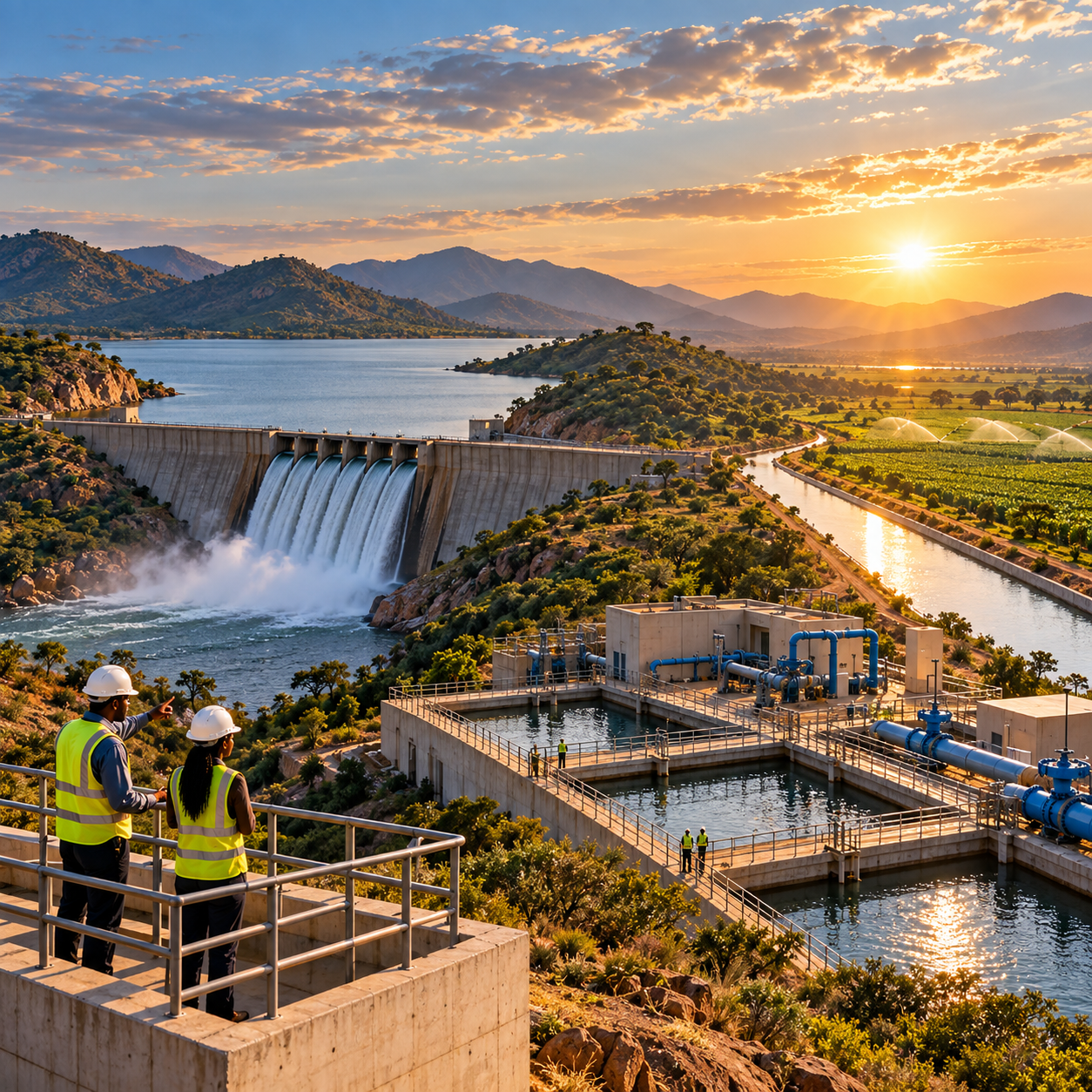
Rehabilitation and modernization of the existing Irrigation schemes: Baro-Akobo-Sobat/White Nile
There are more than 5.3 million ha of land currently under irrigation in the Eastern Nile, most with a poorThe project identification was completed in 2015 with funding from the…
Not reported
Pre-Feasibility Active
52

Semera Dry Port
T.07.04.03
Not reported
Operation Completed
53
Sor Watershed Project
Sor Watershed Project . The Sor River originates in the highland Montane Forests that straddle the Illubabor Administrative Zone of Oromiya Regional State and of Kaffa Administrative Zone in Southern…
Not reported
Pre-Feasibility Active
54

Transborder Submarine Fiber PoPs and Regional Smart Hub Facility and Data center
Kenya already has several sub-marine fibers landing in Mombasa and has already done terrestrial fiber connecting the sub-marine cable to the borders of the other partner countries ( Busia border…
Not reported
Project Structuring Active
55
Transboundary Watershed/Wetland Management Project (Sudan and Ethiopia)
This project will be located in the Blue Nile
Sub-basin covering among others the ecological significant watersheds of the
Dinder and Rahad Rivers. The two rivers originate in the Ethiopian Highlands
and flow…
Not reported
Project Definition Active
56
Transport and Navigation - NEL and Eastern Nile Regions
The Regional Transport and Navigation Development Project is one of several priority projects under the Integrated Water Resources Development and Management Plan for the Baro-Akobo-Sobat Sub-basin in the Eastern Nile…
Not reported
Project Definition Active
57
Upper Birbir (West) Watershed Project
Upper Birbir (West) Watershed Project Upper Birbir (West) Watershed Project is to promote the sustainable management of the natural resources of the watershed while exploiting them to support livelihoods of…
Not reported
Pre-Feasibility Active
58
Zamra-Araqua Watershed Project
Zamra-Araqua Watershed Project was one of 13 potential first-round investment projects identified in 2007 under the Cooperative Regional Assessment (CRA) of Watershed Management in the Eastern Nile Basin. The 13…
Not reported
Pre-Feasibility Active
59
Dawa Aquifer Feasibility Study
Feseabilty study; Assessment of extent and potential of the Aquifer.
Not reported
Feasibility Active
60
Nothern Basement TBA Feasibility Study
Feasibility studies in Kenya/Ethiopia Border
Not reported
Project Definition Active
61
Omo Turkana Basin and draft fisheries integrated management plan
Capacity development
Not reported
Operation Completed
62
Regional pastoral livelihoods project
Livelihood resilience strengthening
Not reported
Completed
63
Shabelle Transboundary Aquiffer Feasibility Study
Feasibility studies in Shabelle Basin
Not reported
Pre-Feasibility Active
 AID Showcase