#
Project
Investment · stage
1

Mombasa-Nairobi-Malaba-Kampala-Kigali Standard Gauge Railway with Malaba-Nimule-Juba Spur
T.RL.26.03
The Northern Corridor Standard Gauge Railway is intended to create an interoperable regional railway from the Indian Ocean port of Mombasa to Uganda and Rwanda, with an additional link to…
2
Nairobi - Malaba Standard Gauge Railway (part of Mombasa - Kigali Railway Project)
T.05.05.01.02
The governments of Kenya and Uganda and Rwanda have committed to the development of a standard gauge railway that links the landlocked countries of Rwanda and Uganda with Mombasa port…
3
Kampala - Kasese Standard Gauge Railway (part of Mombasa - Kigali Railway Project)
T.05.05.01.05
The governments of Kenya and Uganda and Rwanda have committed to the development of a standard gauge railway that links the landlocked countries of Rwanda and Uganda with Mombasa port…
4
Mirama Hills - Kigali Railway (part of Mombasa - Kigali Project)
T.05.05.01.07
The governments of Kenya and Uganda and Rwanda have committed to the development of a standard gauge railway that links the landlocked countries of Rwanda and Uganda with Mombasa port…
5
Kampala-Jinja Road
T.05.03.20
Rehabilitation of 75 km of existing Kampala-Jinja road to widen and strengthen the carriageway. The road forms a critical section of the Northern Corridor, linking landlocked East African countries with the Port of…
6
Malaba OSBP
T.05.02.02
A One-Stop Border Post (OSBP) facility at Malaba border between Kenya and Uganda on the Northern Corridor. Border type: Juxtaposed.
7
Mpondwe OSBP
T.05.02.04
A One-Stop Border Post (OSBP) facility at Mpondwe border between Uganda and DRC on the Northern Corridor. Border type: Juxtaposed.
8
Construction to standard gauge of the Mombasa – Nairobi – Malaba – Kampala - Kigali line (with Malaba – Nimule – Juba spur (Uganda section)
The project commences at the port city of Mombasa and covers a distance of 480 km to Nairobi and then 120km to Naivasha. It then proceeds 500km westwards to the…
9
Kabale - Kisoro Road (100km)
T.05.03.19
Upgrading the existing Kabale- Kisoro National Road From Gravel to Asphalt Concrete Surfacing
10
Kalemie Port Upgrading
T.05.04.06
~~At this stage , the project does require a feasibility study in order to define to the attention of the investor ,all aspects regarding the project namely economic , social,…
11
Kampala-Kibuye Busega-Mpigi Expressway Road
T.05.03.17
Capacity improvement of the Kampala Kibuye Mpigi road to an expressway road standard with limited access.
12
Katuna/Gatuna OSBP
T.05.02.03
Construction of Katuna/Gatuna One-Stop Border Post between Uganda and Rwanda, which lies on the Northern Corridor. Border type: juxtaposed.
13

Kenya-Uganda Petroleum Products Pipeline (Uganda Section)
Construction of petroleum pipeline between
Malaba, Kenya to eastern side of Kampala, Uganda. It is envisaged that the 210
km, 8 inch diameter pipeline will move
Malaba to Jinja (130 km) and then…
14
Nadapal OSBP
T.05.02.05
A One-Stop Border Post (OSBP) facility at Nadapal border between South Sudan and Kenya on the Northern Corridor.
15
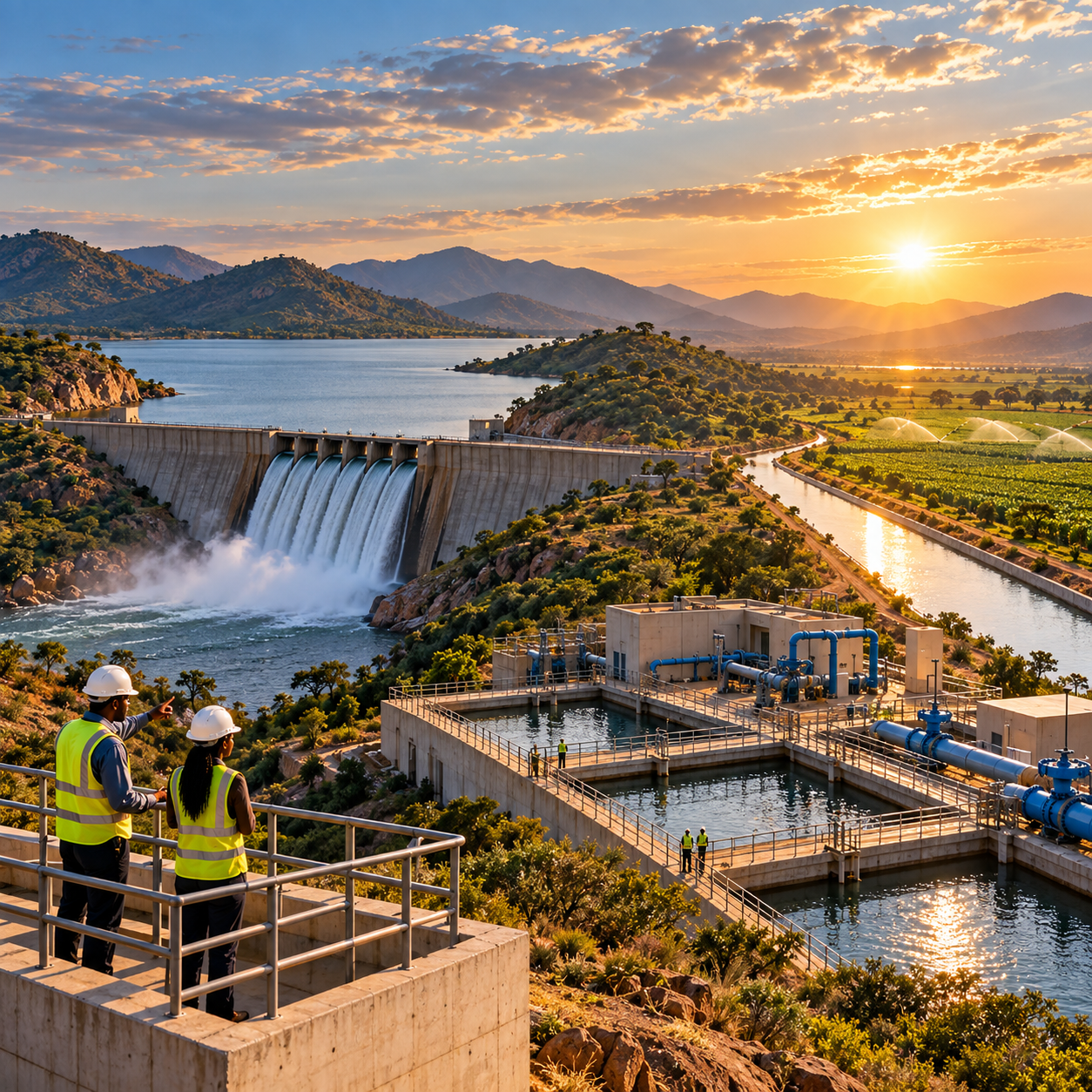
Nyimur Multipurpose Water Resources Project Studies
The core scheme of the project consists of a 26 m head dam and reservoir on Nyimur River and five (5) modules of irrigated lowland rice of approximately 5,105 ha.…
16
Juba-Bor-Malakal-Renki-Sudan border Road
T.05.03.13
 AID Showcase